Why Highly Sensitive Nervous Systems Experience Overwhelm Faster
A client recently said something that I hear often in my work.
“Nothing that big happened today… but I feel completely overwhelmed.”
She hadn’t had a conflict.
She hadn’t worked a twelve-hour day.
But by 3pm her body felt shaky, her thoughts were scattered, and she wanted to crawl under a blanket and disappear.
If you’re a highly sensitive woman, you probably recognize this feeling.
The confusing part is that overwhelm often appears without a dramatic cause.
Which can make it easy to believe something is wrong with you.
But the truth is much simpler — and much kinder.
Highly sensitive nervous systems process more information, more deeply, and more continuously than the average nervous system.
Which means the threshold for overwhelm is not lower because you are weaker.
It’s lower because your system is working harder.
And once you understand this, everything begins to change.
What I’m Learning
My work lives at the intersection of three worlds:
somatic nervous system regulation
Human Design energy awareness
the psychology of highly sensitive people
Each of these disciplines points toward the same truth:
Your body is always communicating information about your energy capacity.
But many sensitive women were taught to ignore that communication.
We override fatigue.
We push through expectations.
We keep going even when the body whispers “enough.”
Eventually the whispers become overwhelm.
The Biology of Sensitive Nervous Systems
Research on Highly Sensitive People (HSPs) shows that their nervous system processes stimuli more deeply.
This includes:
sound
light
emotional cues
subtle shifts in social environments
internal sensations
In other words, your nervous system isn’t just reacting to what is happening.
It is tracking everything that is happening.
Imagine two computers.
One processes ten pieces of information per second.
The other processes fifty.
Which one overheats first?
The second computer isn’t defective.
It simply needs more spaciousness and recovery time.
Sensitive nervous systems work the same way.

Human Design and Energy Sensitivity
Human Design offers another lens that helps explain this experience.
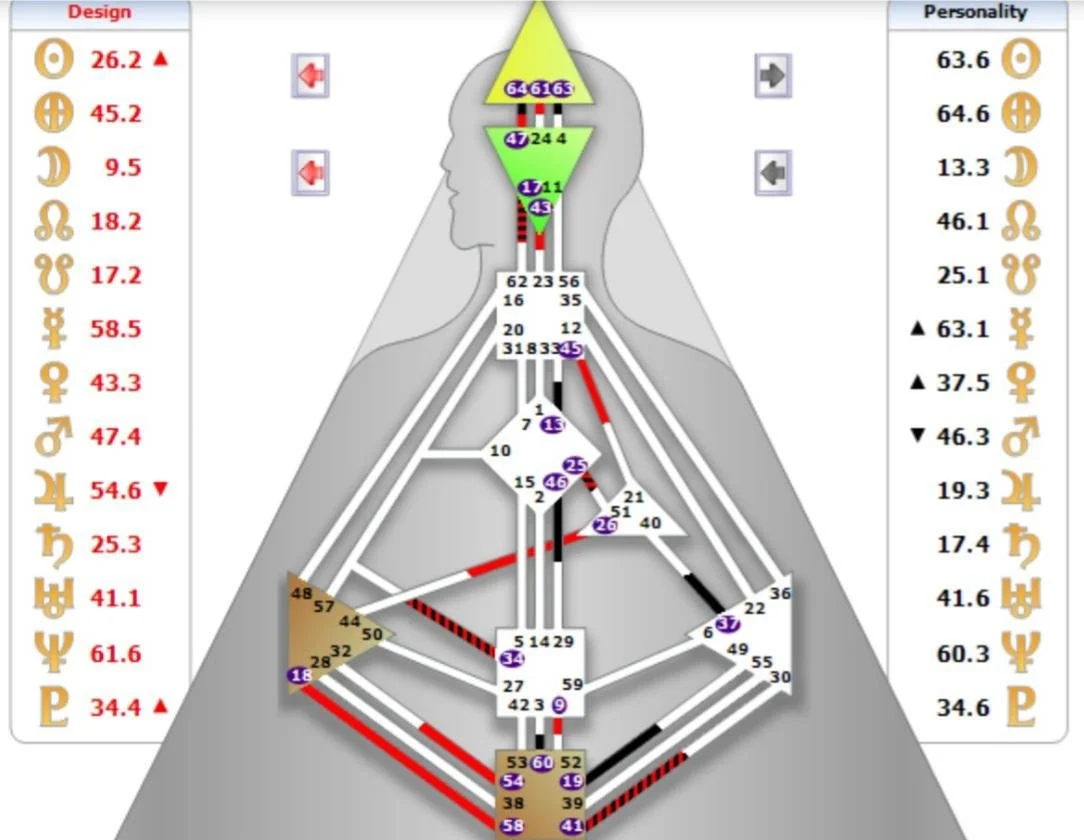
Many sensitive women have multiple undefined centers in their chart.
Undefined centers are not weaknesses — they are amplifiers of external stimuli.
They absorb and magnify energy from the environment.
For example:
An undefined Solar Plexus may amplify the emotional energy in a room.
An undefined Sacral may take on the pace of others’ work rhythms.
An undefined Head or Ajna may absorb mental pressure to have answers.
This means a sensitive woman may walk into a room feeling calm — and leave feeling overwhelmed without understanding why.
Her nervous system has simply been processing and amplifying external signals.
When you combine nervous system sensitivity with energy amplification, overwhelm becomes understandable.

Human Design and Energy Sensitivity
Human Design offers another lens that helps explain this experience.
Many sensitive women have multiple undefined centers in their chart.
Undefined centers are not weaknesses — they are amplifiers of external stimuli.
They absorb and magnify energy from the environment.
For example:
An undefined Solar Plexus may amplify the emotional energy in a room.
An undefined Sacral may take on the pace of others’ work rhythms.
An undefined Head or Ajna may absorb mental pressure to have answers.
This means a sensitive woman may walk into a room feeling calm — and leave feeling overwhelmed without understanding why.
Her nervous system has simply been processing and amplifying external signals.
When you combine nervous system sensitivity with energy amplification, overwhelm becomes understandable.
The Nervous System’s Job
Your nervous system has one primary task:
to keep you safe.
It constantly scans your environment for signals of safety or threat.
This process is called neuroception in polyvagal theory.
When the nervous system detects too much stimulation, it shifts into protective states.
These states may look like:
anxiety
irritability
mental fog
emotional overwhelm
exhaustion
None of these responses mean you are broken.
They mean your nervous system is trying to restore balance.
The Reframe
Overwhelm is not weakness.
Overwhelm is information.
It is the nervous system saying:
“There is more stimulation here than I can process right now.”
Once you understand this, the goal stops being to “push through.”
The goal becomes supporting the system that supports you.
A Simple Practice: The Sensory Reset
If you feel overwhelmed today, try this simple exercise.
Look around your space slowly.
Identify three colors you can see.
Place one hand on your chest.
Take three slow breaths.
This practice works because it brings the nervous system back into the body.
It interrupts the stimulation loop and signals safety.
It may seem simple.
But for sensitive systems, simple practices are often the most powerful.
What Becomes Possible
When you begin to work with your nervous system instead of against it, something remarkable happens.
Energy returns.
Clarity returns.
Decision-making becomes easier.
And the constant sense of “something is wrong with me” begins to dissolve.
Your sensitivity was never the problem.
Your nervous system simply needed structures that honor how it works.
And this is where the real journey begins.