How to Reconnect With Yourself as a Highly Sensitive Person
There are times when losing connection with yourself is obvious.
You realize you've been saying yes to things you don't want. Your schedule no longer resembles the life you want to live. You're exhausted, resentful, or desperate for space.
But often, disconnection is much quieter than that.
You become accustomed to checking how everyone else feels before checking how you feel.
You automatically consider what other people need before recognizing your own capacity.
You make perfectly reasonable choices that somehow leave you feeling less and less like yourself.
Nothing is dramatically wrong.
And yet, something feels missing.
For highly sensitive women, healing your nervous system isn't about doing things better.
Often, it's about reducing the amount of external information your nervous system is organizing itself around so that your own information becomes easier to recognize again.
That distinction matters.

Why Highly Sensitive People Can Become Disconnected From Themselves
Highly sensitive people process information deeply. That depth of processing doesn't only apply to obvious sensory input like sound, light, texture, or busy environments. It can also influence the way we experience relationships, emotions, subtleties, and social information.
When you're continually noticing what's happening around you, your attention naturally moves outward.
You notice someone's mood before they've said anything. You pick up on the tension in a conversation. You recognize when someone needs something. You sense when the energy of a room changes.
That awareness can be an incredible strength.
But when a sensitive nervous system spends too much time oriented outward, internal information can become harder to distinguish from external information.
This doesn't mean you've stopped having preferences, needs, desires, or instincts. They're still there.
They're simply competing with a lot of other input.
That's why reconnecting with yourself often doesn't require becoming more introspective.
Many highly sensitive women are already extremely introspective.
You don't necessarily need to think about yourself more.
You may need to become more familiar with the direct experience of being yourself.
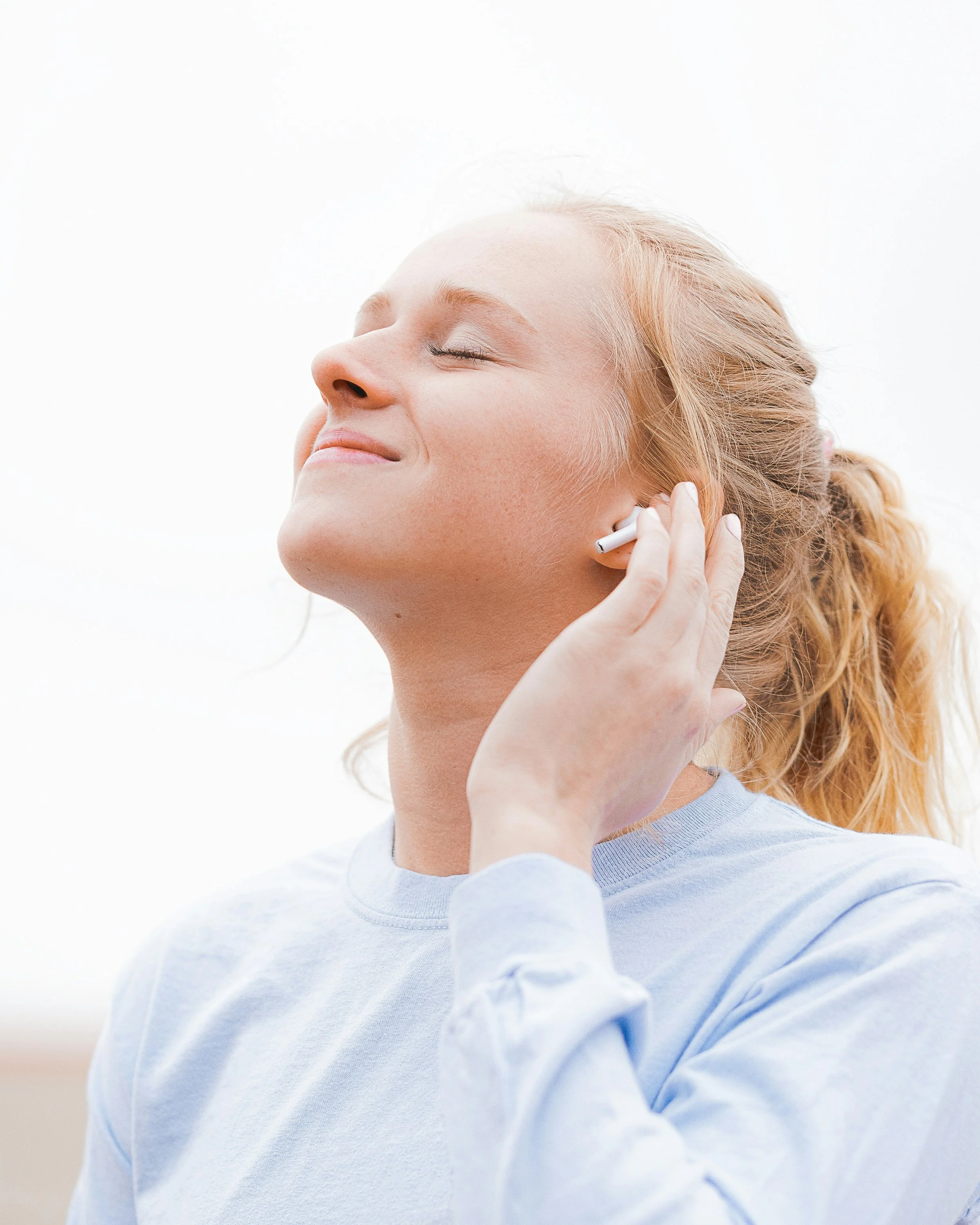
Reconnection Often Begins in the Body
The mind is very good at explaining.
It can explain why you can push through for another week.
But your body communicates differently.
It tightens.
Softens.
Leans in.
Pulls away.
Becomes energized.
Becomes heavy.
Feels settled.
Feels restless.
This is one reason somatic awareness can be so supportive for highly sensitive people.
Instead of asking the mind to determine what you should need, you begin becoming familiar with the signals that are already occurring within your body.
Over time, those signals create a pathway to personal sustainability.
You begin recognizing what enough feels like before it becomes too much.
You notice the difference between excitement and urgency.
You recognize the subtle tension that appears when you're agreeing to something you don't actually have capacity for.
You learn what your body feels like in environments where it doesn't have to remain constantly alert.
And perhaps most importantly, you begin discovering what you feel like when you're not overwhelmed.
That's an important part of identity that we don't talk about enough.
Sometimes the person we think we are is actually the person we've become while chronically activated, overstimulated, or accommodating.
Nervous system regulation can create enough internal spaciousness to discover what remains when the noise becomes quieter.

Regulation Can Help You Hear Yourself More Clearly
Nervous system regulation is often discussed as a way to calm down.
But I think there’s so much more to it.
Regulation can also support discernment.
When your nervous system is overwhelmed, everything can become louder.
Someone else's disappointment feels more urgent. A decision feels more threatening.
Pressure feels harder to resist. Emotions become more intense. Your capacity for nuance may decrease.
When your system has greater access to safety and capacity, there is often more room between what you experience and what you do with it.
You can notice someone's disappointment without immediately changing your decision.
You can feel an emotion without needing to make meaning from it immediately.
You can experience pressure without automatically obeying it.
You can recognize someone else's preference while remaining aware of your own.
This is why nervous system sustainability isn't simply about becoming calm.
It's about creating enough internal capacity to remain in relationship with yourself while life is happening around you.
For a highly sensitive woman, that may be one of the most meaningful forms of regulation there is.
Human Design Can Offer a Map Back to Your Own Signals
Human Design gives us language for something sensitive people often already recognize: we aren't equally consistent in every aspect of our experience.
Some parts of us may feel relatively stable and familiar. Other areas may be much more receptive to the people and environments around us.
The nine Centers offer one lens for exploring that distinction.
An Undefined or Open Center can become a place to observe what happens when you encounter energy outside yourself. It as an area of sensitivity, receptivity, and potential wisdom.
Your Type and Strategy offer another layer by exploring how your energy is designed to engage with life rather than constantly forcing movement from the mind.
And then there is Authority.
For me, Authority is particularly meaningful in a conversation about reconnecting with yourself because it brings the focus away from what everyone else thinks you should do and back toward your own internal frequency and guidance system.

Your Environment Can Either Clarify or Complicate Your Sense of Self
Some external environments can distract you, but some environments can help you to reconnect with yourself.
Your surroundings matter.
Sensitive nervous systems are constantly interacting with the environments they occupy.
Noise, light, movement, clutter, emotional atmosphere, people, pace, and sensory stimulation all become part of the information your nervous system is processing.
When there is too much incoming information, it can become harder to hear the quieter signals coming from within.
This is why you may suddenly know exactly how you feel after taking a walk alone.
Or why an answer appears in the shower.
Or why you can think more clearly after everyone leaves the house.
Or why spending time in nature seems to bring you back into yourself.
You didn't suddenly become wiser.
There may simply be less competing information.
This is another place Human Design Variables can offer an interesting lens. Your Environment Variable can help us explore the particular conditions under which our bodies and minds, aka nervous systems, may function more naturally.
Again, the purpose isn't to create another list of conditions you have to perfect.
It's to become curious about the environments in which being yourself seems to require less effort.
Identity Is Built Through Small Acts of Self-Recognition
We tend to associate identity with big statements.
This is who I am.
This is what I believe.
This is what I want to do with my life.
But identity is also reinforced through hundreds of very ordinary moments.
Choosing the food you actually want.
Admitting you're tired when you’re tired.
Allowing yourself to dislike something everyone else enjoys.
Wearing what feels comfortable.
Taking the quieter route on the drive home.
Changing your mind.
Declining an invitation.
Choosing the chair by the window.
Making something simply because you want to make it.
Leaving when you've had enough.
These choices may seem insignificant, but each one supports your nervous system’s long-term sustainability and health.
For someone who has spent years orienting toward everyone else, I know how important these small acts of self-recognition can become.
You begin gathering evidence that you can have preferences without losing connection.
That someone can disagree with you and you can remain okay.
That another person's disappointment doesn't automatically mean you've made the wrong choice.
That you don’t need to require their comfort in order to experience your own.

Intentional Action Feels Different From Reactive Action
This is where reconnection eventually becomes something more than awareness.
It changes the way you move.
When you're disconnected from yourself, action can easily become reactive.
You respond to pressure.
You respond to urgency.
You respond to guilt.
You respond to other people's expectations.
You respond to what would make everyone else comfortable.
Intentional action has a different quality.
It doesn't necessarily mean moving slowly or feeling completely certain.
It means you are included in the direction.
Your capacity is included.
Your body is included.
Your values are included.
Your needs are included.
Your timing is included.
Your sensitivity is included.
This is an important distinction for nervous system sustainability because the goal isn't to create a life in which nothing overwhelms you.
That's neither realistic nor necessary.
The goal is to create a life in which you don't have to continually abandon yourself in order to participate in it.
Nervous System Sustainability Is a Relationship With Yourself
The more I think about sustainability for highly sensitive women, the less I see it as just a collection of wellness practices.
Rest matters.
Boundaries matter.
Somatic tools matter.
Supportive environments matter.
But underneath all of them is something even more foundational:
Can I remain connected to myself while I move through my life?
Can I recognize when I'm reaching capacity?
Can I hear my body's signals before they're screaming?
Can I experience someone else's feelings without automatically making them mine?
Can I notice what an environment is doing to me?
Can I recognize what supports me without needing it to support everyone else too?
That is what turns nervous system care from something you do when you're overwhelmed into something woven into the way you live.
And I think that's where sustainability really begins.
Coming Home to Yourself
Reconnecting with yourself doesn't require a dramatic reinvention.
You don't need to become unaffected by other people.
You may simply need to begin creating more moments in which your own experience is allowed to matter.
A little less pressure to explain the choices that help you stay well.
These small moments accumulate.
And eventually, you may notice something has changed.
You're still sensitive.
You're still deeply aware of the world around you.
You're still affected by the people you love.
But somewhere inside all of that sensitivity, there is a steadier sense of you.
Your sensitive nervous system deserves support that is as individual as you are.
Human Design can offer a deeply personal lens for exploring how you experience energy, make decisions, interact with your environment, and create greater nervous system sustainability.