What is Human Design? A System for Personalized Energy Alignment
Introduction: Returning Home to Yourself
In a world that constantly tells us who to be, how to act, and what success should look like, it’s easy to lose touch with our own natural rhythm. Many highly-sensitive women move through life feeling overwhelmed by external noise — trying to “keep up,” to fit into expectations that were never designed for them.
Human Design offers a map home — a somatic system that bridges energy, psychology, and soul. It reminds you that your body already knows the way.
1. What is Human Design?
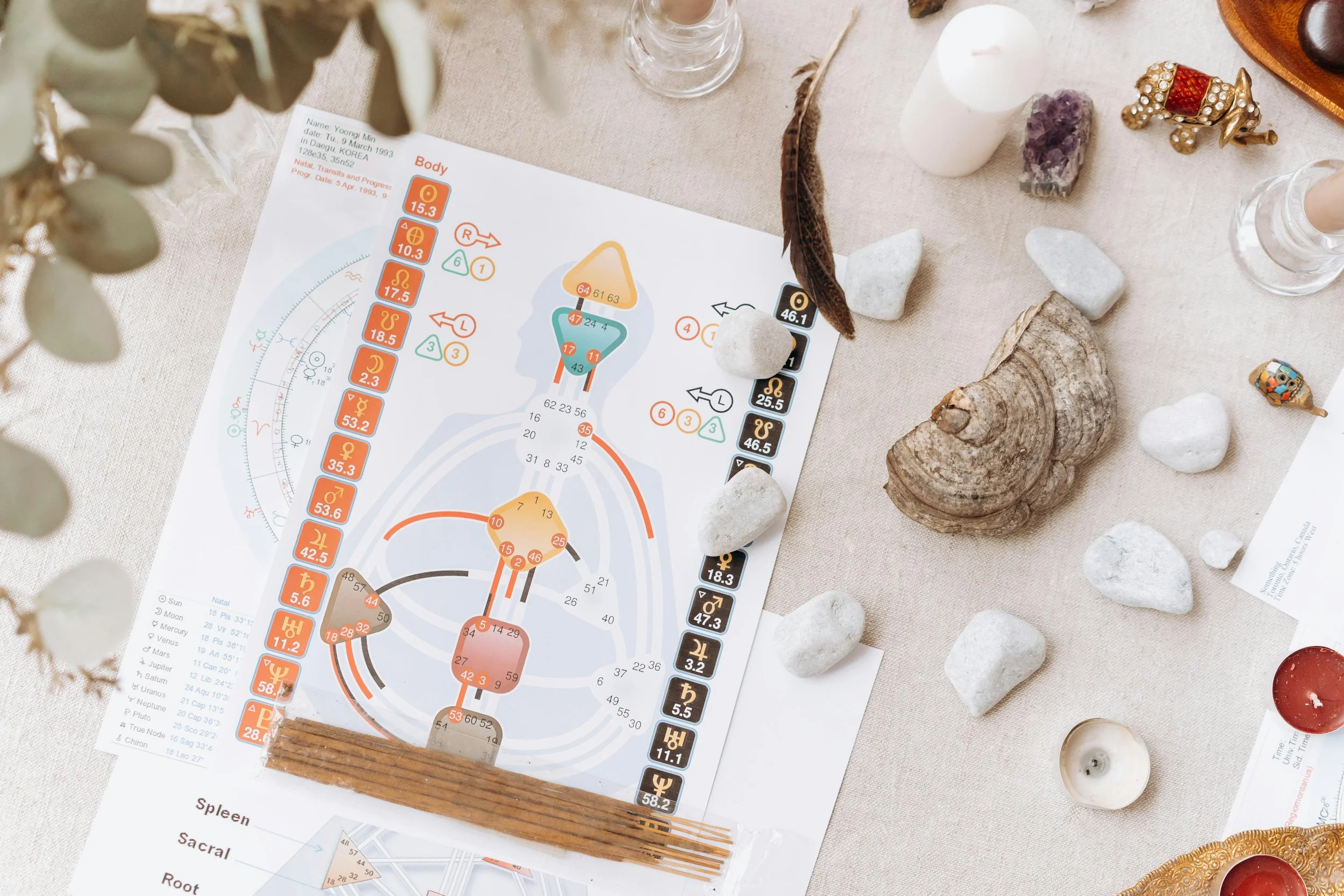
Human Design is a synthesis of ancient and modern systems — blending astrology, the I Ching, the chakra system, Kabbalah, biochemistry and quantum physics. It reveals how your unique energetic body is wired to operate.
At its heart, it’s about energy alignment — learning to live, work, and relate in ways that support your natural design instead of pushing against it. This creates more efficiency in the short-term, and greater sustainability in the long-term.
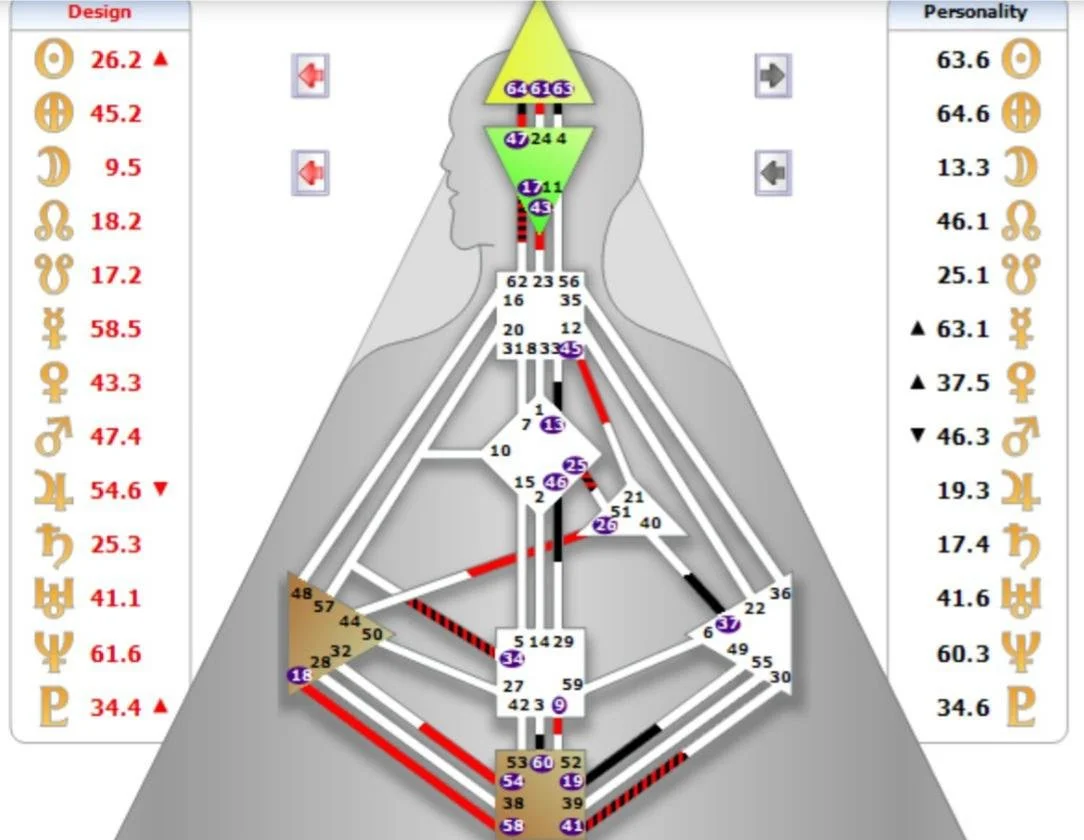
When you first see your chart (sometimes called your BodyGraph), you’ll notice centers, gates, and lines that represent how energy moves through you. These details tell you so much about your purpose, your strengths, and even your sensitivities.
For HSPs, Human Design can feel like a deep exhale — finally understanding that your sensitivity is not a flaw, but a form of intelligence.
2. The Importance of Differentiation & Deconditioning
In Human Design, the word differentiation describes the process of becoming who you truly are — free from the layers of conditioning that told you to dim your light or “toughen up.”
Conditioning often shows up as the tension between your natural energy and the expectations placed upon you. Over time, this creates exhaustion, emotional overwhelm, and disconnection from your body’s cues.
Deconditioning is a somatic practice — it’s not about thinking your way out of old patterns, but about feeling your way back into your truth.
When you begin to honor your design, you start to release what isn’t yours. Your nervous system begins to relax. Life starts to flow with more ease and stability.
3. The Magic of Personalized Energy Support
Human Design isn’t just a personality system — it’s a living, breathing map for nervous system regulation and self-alignment.
Each design type interacts with life differently: Generators & MG’s need to respond, Projectors need recognition, Manifestors need freedom to initiate, and Reflectors need time and connection to lunar rhythm.
Understanding your type allows you to make decisions that support sustainability, rather than burnout.

It also helps you see where you’ve been over-exerting — where your energy leaks occur, and how to replenish through alignment rather than force.
Imagine starting each day with the question: “How does my energy want to move today?”
That’s the essence of Human Design — a daily invitation to move with your body’s wisdom.
4. Embodied Integration: A Somatic Practice
To truly live your design, bring awareness into your body. When you notice tension or fatigue, pause and ask yourself:
“Is this mine, or am I holding someone else’s energy?”
“Am I acting from conditioning, or from alignment?”
“What would ease feel like in this moment?”
By tracking sensations — warmth, tightness, tingling, or expansion — you strengthen the connection between your intuition and nervous system. Over time, this creates energetic stability and grounded confidence.
5. Closing Reflection
Human Design is not about becoming someone new; it’s about remembering who you’ve always been.
For the highly-sensitive woman, it’s a framework that honors your depth, intuition, and wisdom. When you live in alignment with your design, you create a life that feels sustainable — not because you’ve mastered control, but because you’ve surrendered to truth.
“When you live by design, your energy aligns — and life begins to flow with ease.”